Lisa's Bookshelf

I'm a self-confessed nerd who loves to read, write, watch TV, and cuddle with my animals (and my husband too, of course). I have an eclectic taste in books ranging from classic literature to silly YA novels to epic fantasy and contemporary lit. I've joined BookLikes in order to stay in touch with my awesome Goodreads friends who have moved over.

If You Find Me - Emily Murdoch

If You Find Me is a novel with a lot of heart but, unfortunately, isn't very realistic in terms of plot, character development, or in its portrayal of the child welfare system.

If You Find Me tells the story of fourteen-year-old, Carey Blackburn, who lives in the wilderness with her younger sister, Jenessa, and her increasingly absent bipolar, meth addicted mother, who abducted Carey when she was four years old. Carey is the primary caregiver for her sister and is responsible for insuring their survival until one day their mother disappears for good and they are taken to live with Carey's father, a man Carey has always believed is abusive.

Before I go into why this novel didn't work for me I want to mention what did work. First and foremost the writing is simply beautiful. The descriptions are emotive and lyrical, and I enjoyed the quotes from Winnie the Pooh. I love Carey's voice, which comes across as authentic despite the fact that it's a bit too mature for a fourteen your old, even one who has bared as much responsibility as Carey has. Carey's desire to go back to what is familiar to her, despite the hardships she endured, was realistic as was her ambivalence towards her mother. I also thought Carey's relationship with her sister was touching. Murdoch does a good job of showing Carey's love for Jenessa through her devotion and protectiveness.

Unfortunately, I found the rest of the novel to be very problematic starting with the portrayal of the public child welfare system. It is completely unrealistic. Social workers are case managers not direct service providers. They rely on the recommendations from service providers (teachers, therapists, doctors, speech therapists etc.) in making their recommendations to the court and in deciding what is in the best interests of the child, and yet I saw the social worker in this book doing a lot of work that would have been done by the service providers. In addition to misunderstanding the role of the social worker, there are major procedural issues as well. All of them could have been avoided if the topic had been thoroughly researched. The Department of Children's Services in Tennessee has posted ample information about their policies and procedures here and here. Some of the inaccuracies I noted:

• Social workers do not bring non-offending parents with them to retrieve children from offending parents. This is a major liability issue. In all likelihood the social worker would have brought the police because the situation was potentially dangerous, and if not the police then at least another social worker.

• Social workers do not stay in motel rooms with the children they remove. This would be a huge liability for the department, not to mention expensive. The children either would have been immediately placed with Carey's father (assuming he and his family had had the proper background checks, and his home had been inspected thoroughly for child safety issues) or placed in foster care. Carey could be released to her father's custody fairly quickly, but since Jenessa is not related to him by blood he would have to be a licensed foster care provider for her to be placed with him, which doesn't happen in the span of 24 hours.

• A social worker also would not give the children her home phone number. This is a boundary issue, and while it may happen with long-term clients, it wouldn't happen with children who don't have a well-established relationship with the social worker.

• Upon taking Carey and Jenessa into custody, the social worker would have done a lengthy interview. The girls would have been asked details about how they had been living, about their mother's behavior, whether or not their mother had ever physically abused them, whether they had been sexually abused, etc. These interviews are very thorough because the information has to be reported to the court.

• The social worker would likely have looked for marks on the children and discovered the scars on Jenessa's back prior to them being place with Carey's father.

• The girls would have had a medical evaluation soon after being taken into care. If the scars hadn't been discovered by the social worker they would have been discovered by the doctor and there would have been interviews about them.

• The children would have had an attorney to represent them in court. in Tennessee they are known as a Guardian ad Litem. This attorney would have seen the children and spoken to them as required by law.

• Carey and Jenessa would have been court ordered to do individual therapy. Even if the social worker were completely incompetent and did not recommend this, their attorney most definitely would, and the judge would certainly order it.

• Social workers do not administer educational tests nor do they evaluate them or make recommendations based on them. Educational testing would be handled by the Department of Education.

• The children would not intentionally be kept out of school for a month. There are laws that require children to be in school, and most states have laws that require social workers to enroll the children in school within a certain timeframe, which is much shorter than a month (in California it's five days). This doesn't always happen because of incompetence but it's never the plan.

• The social worker would in no way be qualified to diagnose Jenessa as having selective mutism nor would she be qualified to recommend the frequency of visits with the speech therapist. Jenessa would be referred to speech therapy and the speech therapist would then make a recommendation as to how often she would need to be seen. This referral would have been made immediately not weeks after Jenessa was in care.

• In Tennessee there is a meeting within 30 days of the child's removal which includes the social workers, attorneys, parents, caregivers, children, and other interested parties specific to each case, to discuss the children's needs and services as well as the longterm plan. This meeting never occurred in the book.

• The social worker who initially removed Carey and Jenessa, Mrs. Haskell, would not be their social worker after the initial investigation was completed. They would have been assigned an on-going social worker who would do their monthly visits and review reports.


In addition to the inaccuracies relating to the child welfare system, I also found other aspects to be unbelievable. It would be almost impossible for two girls with an absentee, mentally ill, substance abusing mother, raised in the wilderness without monetary resources to be two grade levels ahead of where they're supposed to be. It's explained that the mother purchased school text books at yard sales, which would be nearly impossible since most children don't own their textbooks (they're borrowed from the school and returned at the end of the year, especially in the early grades). Children also typically require a responsible and invested adult to help them learn and Carey and Jenessa's mother was presented as anything but. Additionally, I thought it was unbelievable, given the level of Carey's mother's addiction, that she would not have sold her daughter's violin to buy drugs, and maybe food. She would have certainly sold it before selling her daughter's body.

The children's adjustment to living with Carey's father also doesn't ring true. Jenessa in particular adjusts much too quickly. It just isn't realistic given the kind of abuse she endured. There is also a real lack of exploration of Carey's feelings about living with her father. She believed so strongly that he had abused her that she did not go for help in the face of her mother's abuse and neglect yet she is willing to question the abuse shortly after being found by the social worker, and doesn't experience much fear. It also seems unrealistic that she would allow Jenessa out of her sight with a potentially abusive man around considering how protective she is of her.

Lastly, I was disappointed that there were so many YA tropes in this novel. Carey is a violin prodigy, a genius, and breathtakingly beautiful, all the makings of a special snowflake. Like all beautiful YA heroines, she doesn't know she's beautiful, although at least in this case there is a good reason. What isn't realistic was how everyone kept gushing about her beauty. There is also a popular boy who falls for Carey on her first day of school, one whom her nemesis and step-sister, Delany, has a crush on, but he isn't interested. Although his initial interest in Carey is explained later on, the development of their relationship and his deeper feelings towards her happen much too quickly. Delany also fits the trope of the bitchy blonde cheerleader who tortures the heroine because she's jealous. While there is a valid reason for her jealousy, I thought her behavior was over-the-top, and kept Delany from being a well-rounded and compelling character.

While I can understand why others loved this book, I could not get past the unbelievable plot points, inaccurate portrayal of the child welfare system, and the inclusion of so many YA tropes. I believe a book that tackles such serious issues needs to be realistic and this one definitely isn't.

City of Bones - Cassandra Clare Initial thoughts:

Plot: 3
Characters: 2
World-building: 2
Writing: 1

Average: 2

Review...maybe. I'm not sure I have the energy to explain myself more fully.

Full review:

(It turns out I did have the energy to explain myself further.)

Going into City of Bones I wasn't sure how I would feel about it. I don't think there is any other book on Goodreads that has received such varied ratings from my friends. It's not just a love it or hate it book because a good number have rated it three stars too. Now that I've finished it, I can say that City of Bones wasn't as bad as I feared it to be, nor was it as good as I'd hoped.

I had heard that City of Bones was based off of Cassandra Clare's Harry Potter fanfiction so I was expecting the book to read like Harry Potter with the names changed. I was pleasantly surprised that this was not the case. Don't get me wrong. City of Bones is highly derivative, but it's derivative of many different sources, not just Harry Potter so it reads more original than many of the Twilight rip-offs I've had the misfortune of reading. The book contains a bit of Star Wars, Buffy the Vampire Slayer, and I got a distinct anime vibe from some of the scenes, particularly the battles. I'm sure there are other borrowed sources (many people have pointed them out in other reviews) but these are the ones that stood out to me. Aside from the derivative nature of the story, I also took issue with the overall flow of the narrative. There are far too many scenes and side plots that do nothing to move the main narrative forward. Nerdy observation: They reminded me of side quests in RPGs, which have nothing to do with the main storyline and are completely optional, but without the rewarding sense of accomplishment, leveled up characters, or special items one receives after completing such quests..

The Shadowhunter world is far too convoluted and random for my tastes. Clare uses the "everything and the kitchen sink" approach to world-building. There are demons, angels, vampires, werewolves, zombies, witches, warlocks, hindu gods, fairies and every other mythological being known to man. Except mummies, which is odd since they actually do exist (there's photographic evidence), however, it's doubtful any of them have ever come to life. Very few authors are able to take beings from different mythological categories (e.g. fantasy, horror, religion) and blend them together, and Clare isn't one of them. While I thought the world-building was original in some respects, there were many aspects that were a little too similar to the magical world in Harry Potter, including the use of the word mundanes for humans instead of muggles, and the construction of the secret Shadowhunter world within the mundane world.

I wasn't impressed with the characters either, although I found their personalities to be much less similar to Harry Potter than others did. Although Clary, Simon and Jace physically resemble Ginny Weasley, Harry Potter and Draco Malfoy, I didn't think they sounded or acted like Rowling's characters, nor did Clare capture their hearts and souls (if in fact this was her intention). I wouldn't have made the connection had others not pointed it out beforehand. That said, Valentine's actions, thoughts and history are reminiscent of Voldemort's, and his Circle is eerily similar to the Death Eaters, though they aren't carbon copies.

Although I didn't think the characters were much like their Harry Potter counterparts, I did find them problematic in other ways. Clary is your typical Mary Sue. Beautiful but thinks she's plain, the hottest guy (supposedly) in the book falls for her without any real reason, she's a super talented artist, she's got special magical powers, and everyone bends over backwards to save her. Jace is your typical YA love interest. He's hot (supposedly), he's a jerk to everyone including the heroine, he hooks up with tons of girls and treats them like objects, he's only truly ever loved the heroine, and he's the greatest fighter of all the Shadowhunters. He also drives a motorcycle, which isn't characteristic of all YA love interests, but is pretty common. Honestly, I don't understand his appeal. I will give Clare credit for not having Jace and Clary instantly fall in love with each other (even if I don't understand the attraction between them), and for giving Jace a valid reason for taking an interest in her in the first place other than a super special soul mate connection.

By far the weakest aspect of City of Bones is the writing. Here are a few examples:

"He pushed down on the wooden thing. It bent as easily as a blade of grass bending sideways." — This is one of many ridiculous similes.

"It was a derisive sort of cough, the kind of noise someone might make who was trying not to laugh out loud."/"She laughed out loud."/"When she collided with something unmistakably alive, she yelped out loud."/"Isabelle laughed out loud."/"Clary laughed out loud." — This is a novel not a text message. If a character laughs or yelps, the reader will assume that it's out loud unless otherwise stated.

"The weapons room looked exactly the way something called 'the weapons room' sounded like it would look." — Awkward and also unnecessary.

"Clary regarded her pancakes consideringly." — Redundant and awkward. Regard means to consider so basically this sentence reads "Clary considered her pancakes consideringly." Also, Oxford Dictionaries Online, Collins Online Dictionary, Cambridge Dictionaries Online, Macmillan, and Oxford University Press do not recognize "consideringly" as a word, although dictionary.com and Merriam-Webster Online do.

"Clary let out a breath she hadn’t realized she’d been holding." — See Christina's blog post over at A Reader of Fictions for a full discussion of what's wrong with this sentence.

Additionally, the dialogue, which is touted by fans as being humorous, sounded cheesy and forced to me. I don't think I laughed once (out loud or otherwise). There are also a lot of unnecessary adverbs and dialogue tags, a common problem in YA fiction unfortunately. There is nothing positive I can say about the writing.

I was not impressed with City of Bones, though I may check out the rest of the trilogy so that I can read Clare's other Shadowhunter trilogy, The Infernal Devices, which is held in higher regard by my Goodreads friends.
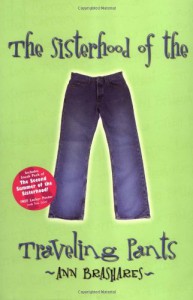
The Sisterhood of the Traveling Pants - Ann Brashares This book took me completely by surprise. I wasn't planning on reading it but the movie was coming on and I decided I should read the book first before watching the film. The Sisterhood of the Traveling Pants is a story with an awful premise that was surprisingly well-executed.

Going into it, I expected some silly, shallow book about four teenage girls falling in love over one summer, but instead this book focused on the exploration of family dysfunction, death, and the bonds of friendship. The Sisterhood of the Traveling Pants is not a romance, although there are romantic elements of varying degrees in three of the girl's stories. It was refreshing to find the romance taking a backseat to other important issues in a contemporary young adult novel. The four main characters, as well as many of the side characters, were fleshed out and very distinct from one another. I found myself coming to care about all of them.

Two things kept this from being a five star read. One was the premise. The idea of magical jeans that fit all four girls perfectly was a bit too silly for me, and I feel that the story could have stood on its own without it. The pants weren't necessary or even integral to the plot. The other reason for the missing star was the writing. I thought it was a bit clunky with adverbs and adjectives galore, and excessive use of dialogue tags when they weren't really needed. It was distracting enough to take me out of the story at times. Otherwise, this was a fantastic read, and I will certainly be reading the sequels.
Scarlet - Marissa Meyer

I really didn't want to write this review because I hate being an outlier, especially when I'm being Debbie Downer. I fully expected to love this one. After all, I gave Cinder four stars and by all accounts Scarlet is even better. Perhaps I was expecting too much, but I also have to chalk some of the discrepancy to a change in taste. The things that irritated me about Scarlet were issues I noted with Cinder, only they were more problematic for me this time around.

The first sign that Scarlet and I weren't going to get along was my irritation over the writing style. It is very juvenile. There is a lot of telling and very little showing, and everything is told in a very simplistic way (as opposed to Leigh Bardugo's Shadow and Bone, which also has a fair amount of telling but with very pretty prose). Instead of providing visual or auditory clues to show character emotion, characters in this novel say things in a/an [insert emotion] way, or [insert emotion] radiates off of the character, or [insert emotion] is written all over the character's face, or one character senses that another character is feeling [insert emotion]. This made it hard to visualize many of the scenes, and kept me from vicariously experiencing the story.

As with Cinder, the world-building, both in terms of history and present scenery, is lacking. By the end of the second book, there should be a clearer picture of how this post-apocalyptic world came to be, yet the reader is given no more details about the vague world wars and consolidation of countries than in the first book. While I do think there was some improvement in the description of the current scenery—there are actual French landmarks mentioned in Paris—the setting was still superficial. I could find nothing to distinguish Asian, American, and European culture aside from Europe having wine and Asia having dragon decor.

In terms of plot, Scarlet suffers from predictability issues, partly because the story follows Little Red Riding Hood and partly because much of Wolf's character is spoiled by The Queen's Army. I think I would have enjoyed Scarlet more if Wolf's history had been a mystery. The Queen's Army is a nice addition to the series but would be better read after Scarlet. There were also a couple plot twists that were obvious to me because I knew the story of Little Red Riding Hood. There was no question in my mind that Wolf was going to betray Scarlet and that his finding her was all part of the plan because of the fairytale. I think the story would have been stronger had I been less certain of Wolf's motivations. While Cinder also had predictability issues related to Cinder's history, I thought there was enough suspense in other areas to sustain the story despite its predictability.

In the end, the most problematic aspect of Scarlet is the characters and their utter stupidity and nonsensical thinking. They all have a real blind spot when it comes to figuring out that Cinder is Princess Selene. Kai still doesn't figure it out, nor does Captain Thorne despite having clear evidence thrown in his face. But it's Scarlet and Wolf who win the award for most oblivious. They know that Princess Selene was adopted by a man from the Eastern Commonwealth, that his surname is Linh, that there is a Lunar teenage fugitive whose surname is also Linh, that she is the same age as Princess Selene, and that she is wanted by Queen Levana, and they don't figure it out. Their lack of reasoning is unbelievable and it makes them both look like idiots.

Character stupidity does not end at Princess Selene's true identity. Scarlet shows poor judgment in trusting Wolf after knowing him only a day. In fact, she doesn't truly begin to trust him until after she finds out that he's been lying to her the entire time they've been together. Instead of taking this information to mean he isn't trustworthy (the logical conclusion), she proceeds to fall in love with him almost instantaneously. While there is no love at first sight between Scarlet and Wolf, the love between them comes out of no where and is baseless. Despite having met only a week prior and having spent maybe two days together total, by the end of the story they have fallen in love, risked their lives for each other, and decide to be life partners. Kai's solution to the Lunar problem also makes absolutely no logical sense. I can't give him credit for nobility because he's only making the situation worse. His decision to marry Queen Levana doesn't reduce the Lunar threat, and, in fact, increases it. He knows Queen Levana plans to kill him after they're married and use the Commonwealth as a stepping stone to taking over the planet. Marrying her does bring about temporary peace, but it also puts Earth in more danger. None of the characters are particularly intelligent.

Lastly, Meyer gives inaccurate information about the social structure of wolves. This indicates a lack of research, which is one of my biggest pet peeves. Even Wikipedia gets it right, and there are several free scientific journal articles on that subject that are readily available. While it would certainly make sense for Wolf and his hybrid pack to behave as they do (with betas and omegas and such), it's misleading to suggest that this is how wolves behave in the wild.

While I did not enjoy Scarlet, I do think most people who liked Cinder will like this one as well. The things people loved about Cinder are still true in Scarlet. The plot is fast-paced and the female characters are strong-willed, however, I would caution people away from this book if they are at all sensitive to shallow world-building, simplistic writing, obvious plot points, or oblivious characters.

Behind the Beautiful Forevers - Katherine Boo I read Behind the Beautiful Forevers for a book club that I recently joined. It is not the kind of book I usually read but I thought I'd give it a shot and I'm glad I did. This was a beautiful and informative story about individuals and families living in Annawadi, a slum of Mumbai, India.

I admit that my knowledge of Indian culture and geography is very limited. When I think of India I think of call centers, long weddings, reincarnation, a few Hindi myths and the highly publicized caste system, which I recently learned is outlawed although still practiced. Behind the Beautiful Forevers opened my eyes to the plight of the poorest citizens of India. Starvation, insanitary living conditions, illness, poor wages, hazardous work, child labor and political corruption are just some of the obstacles faced by those living in the Annawadi slum.

It was heartbreaking to read about the injustices they suffered, and the desolate poverty they experienced. There were times when I had to put the book down because it was so depressing, especially knowing that this was a true story and the events actually happened. Multiple people commit suicide, murders go unacknowledged by the authorities, hospitals refuse care, and the criminal "justice" system has little justice and a lot of corruption. And yet, even with the atrocities committed against the individuals and families chronicled in this book, the story is not without hope. Many of the characters, particularly in the younger generation, are still optimistic that things will change, and even among those who have accepted their condition, there are many that still have aspirations within the limits of their social and economic situations.

I admire Katherine Boo for undertaking this exploration of the lives of those living in such appalling conditions, although I do wonder what sort of effect her presence had on their lives. For example, in the author's note it's mentioned that the police were unhappy about the slumdwellers talking with Boo so I question whether the Hussain family was targeted (at least partly) by the police because of their participation in Boo's project. I also had questions about the morality of simply observing injustice without interfering for the sake of research. While many of the issues were societal and not easily addressed by one individual, I do think there were situations where Boo might have been able to make a positive impact. These issues are, of course, not limited to this book. They are common questions in the field of anthropology and the answers still aren't clear.

Behind the Beautiful Forevers is not an easy book to read, but it's incredibly worthwhile and educational. I would recommend it to anyone who wishes to better understand the plight of underprivileged people in our global society.
Pretty Little Liars - Sara Shepard I'm ashamed to admit I've read this book, and the only reason I'm copping to it is because I need it for my reading challenge. Pretty Little Liars is not the type of book I usually read, but after a friend admitted the show was one of her guilty pleasures, I decided to check out the book. Unfortunately, I got no pleasure from reading this, only guilt and frustration.

Pretty Little Liars tells the story of Aria, Spencer, Emily, and Hanna, four girls whose best friend, Alison, disappears one night during a slumber party. After their devastating loss the four girls drift apart, leading their own separate lives. Aria spends two years abroad in Iceland, Spencer immerses herself in her academic and extracurricular actives, Emily focuses on swimming, and Hanna loses weight and becomes the new "it" girl at their posh private school, Rosewood Day. Three years later, each of them begin receiving ominous text messages from someone named A, who threatens to expose their secrets—secrets only Alison knows.

The best thing about this book is the premise. In the hands of a good writer, this could have been an engaging read, but there is not one aspect of the story, other than the mystery, that was handled well. The characters are vapid and shallow, and an extraordinary amount of time is spent describing their appearance, in particular their designer clothing. The messages are appallingly unhealthy. One of the main romances is between Aria and her English teacher, which is presented as "true love" rather than an inappropriate affair between a young girl and a much older man, who as her teacher holds a lot of power over her. There are also implied messages about the importance of being thin, wealthy, and wearing designer labels.

The writing was very clunky and unpolished. The dialogue was unrealistic, particularly when it came to the parents. There was an excessive use of dialogue tags and an excessive use of words other than "said." Characters "squeaked," "whispered," "spat," "murmured," and "threw in" all on one page, in the course of one conversation. While I'm hardly a stickler for the "only use said" rule, I found it very distracting here. Instead of relying on the dialogue itself to show how the characters are speaking, the dialogue tags tell us how the lines are being delivered. Shepard also tends to abuse adverbs throughout the text. Most times they were unnecessary, and sometimes they were downright awkward. In one example, a boy "messily dribbled" beer down his chin. The word "messily" is unneeded because it's implied by the situation.

I won't be reading on in the series, although I'm mildly interested to know who A is. The mystery is intriguing, but I don't care what happens to any of the characters, and I can't suffer through glorified student/teacher relationships, or poor writing to satisfy my curiosity. Those who enjoyed the Gossip Girl series will probably enjoy this one.
A Storm of Swords (A Song of Ice and Fire, #3) - George R.R. Martin This was the best book of the series so far. Thank you HBO for getting me to read this series. It was worth it for this book alone.

Review to come if I can find the words.
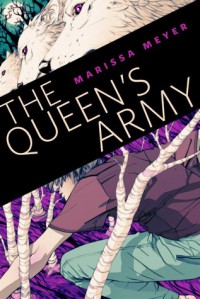
The Queen's Army (Lunar Chronicles, #1.5) - Marissa Meyer

I enjoyed The Queen's Army but I'd recommend reading it after finishing Scarlet. There are some important spoilers in this novella for book two of the series. I think I would have enjoyed Scarlet more had I not known who Wolf was and about his background.

Everbound - Brodi Ashton

Rarely can I say that a sequel surpasses its predecessor, but Brodi Ashton managed it with Everbound. Many of the complaints lodged at Everneath were absent here. Although Everbound had a bit of a slow start (the real adventure doesn't begin until a third of the way through), it was filled with action and fast-paced adventure. Nikki is also more driven and less mopy than she was in the first book. Although she has doubts about her ability to save Jack, she maintains hope to the very end, and refuses to give up. Nikki's father is also present in Everbound, and he takes an active interest in Nikki's life. In fact, he takes his concern for Nikki a bit too far at one point. Drugging your teenage daughter is not acceptable, and I thought Nikki's therapist's reaction was unrealistic. As a mandated reporter, she would have been required to report this to CPS and perhaps the police, or risk losing her license.

The love triangle continues to shine in this book as it did in the first. I still found Nikki and Jack's relationship to be very compelling and sweet. In Everbound we get to see some of Jack's flaws, which rounded his character out a bit, but he remains firmly in the "good guy" camp. I knew that Nikki and Cole's relationship would be further explored in this novel and I had a lot of trepidation about it, but Ashton handled it superbly. Nikki's feelings for Cole develop slowly and organically, without an over reliance on their soul mate-like connection. Her feelings build over time after shared experiences and heartfelt conversations. Despite their history, it was believable that Nikki would come to care for and trust Cole. Even more surprising, Ashton manages to develop their relationship while still being true to Cole's character.

Although I thoroughly enjoyed Everbound, it was not without its flaws. Often times the resolution to a conflict would be a little too convenient, which was also one of the issues I had with Everneath. In one example, a random city-wide blackout occurs just when Nikki and company need to escape. Nikki's memories also have a bit of a deus ex machine quality to them. In the Everneath they can literally turn into anything, much like Glory in Boundless. Other than the convenience factor, there were also some minor issues with the setting in the flashbacks. Most if not all take place while Nikki is a freshmen in high school yet she owns and drives a car, although she's only fifteen and in Utah a teenager can't get their license until their sixteen. Also, Nikki was taking chemistry her freshmen year (as did all the characters mentioned), a class which is typically taken during sophomore or junior year because geometry is a required for the course (yes, I looked it up and this is true in Utah). Again, these are minor issues but they did take me out of the story.

I was prepared to give Everbound a solid four stars, but the ending earned this book another half-star. I'm not easily surprised by plot twists, particularly in YA novels (I saw the twists in Everneath coming many chapters before they were revealed), but I did not predict the end of Everbound. Not only was the twist surprising but it was also very fitting, both in terms of plot and characterization.

I would recommend this book and series without any reservations. I can't wait to read the final book in the trilogy.

Boundless - Cynthia Hand

Spoilers for Unearthly and Hallowed. Do not click on the spoiler links unless you've read Boundless.

Once again I find myself having mixed feelings about an Unearthly book, although this time my feelings were much clearer than with the last. In my opinion, this was the weakest of the series, though Cynthia Hand's engaging narrative style still makes it a quick and enjoyable read despite its flaws.

While I certainly found myself much more frustrated with Clara in this book than in the first two, I can't help but love her voice. She's still very relatable, and I adore her humor and moments of self-deprecation and self-awareness, which is lacking in many YA PNR heroines. I also rediscovered my love for Jeffery in Boundless. I concur with other reviewers that he would make for a good spinoff character if Hand wants to revisit the Unearthly universe at some point. Clara's relationship with her mother, which is consistently awesome in all three books, is still compelling. Maggie would also be another good choice for a spinoff character. I would love to learn more about her life and her relationship with Samjeeza.

Many of the issues I had with Boundless began in Hallowed and either continued on or became more extreme. Although the Unearthly trilogy has had an element of wish fulfillment from the beginning, it was tempered in the first book by Clara's relative inadequacies and weaknesses. In Hallowed, these weaknesses were minimized with the revelation that she's a Triplare and the daughter of the archangel, Michael, but at least she still had to struggle with her powers. In Boundless we learn that not only is Clara a Triplare, she's even powerful for a Triplare. She masters new skills much more easily than other angels, and when her powers fail, it seems more like a plot contrivance than a genuine struggle because of how easily they came to her in the first place.

I also felt that this book had more of a moral agenda than the previous two, although it was much more subtle than in other books like Halo. As the trilogy has developed, the mythology has relied more and more on Christian theology. In the third book one message that is telegraphed very strongly is the importance of believing in God. Evil corrupts one character by getting him/her to stop believing in God and he/she literally ends up in hell because of it. There is also an unplanned pregnancy in which there are implicit messages about how it should be handled and viewed. The entire pregnancy storyline really put a bad taste in my mouth. Once again we have another example in YA lit where a girl gives up her future to have a child and ends up content with the outcome despite her drive and ambition. There's also some subtle messages about sex. In one example, Clara becomes outraged at the suggestion that she might sleep with Christian on their first date. She emphatically lets it be known she's not "that" kind of girl, which reeks of judgment.

The mythology continued to be an issue, starting with Glory, which becomes much too convenient. It can literally be anything the angel/angel-blood wants it to be, and it can be channeled and localized taking away its only weakness, which was that it could expose those who used it. Then there's the whole idea of ambivalent angels introduced in Radiant. How can an angel be ambivalent? Being ambivalent in and of itself is going against God. It suggests angels have free will, which is what is supposed to separate angels from humans according to Unearthly. And how exactly is Phen ambivalent if he's working for the Black Wings? Further, why does he not become a Black Wing after he sleeps with Angela and gets her pregnant out of wedlock? It's a sin for angels to sleep with humans, except when ordained by God (Michael and Maggie, and apparently Maggie's mother and Uriel) and at least in the case of Michael and Maggie, they were married first. I also don't understand why the angels aren't fighting this battle with the Black Wings. Why send angel-bloods to do what a full-blooded angel could do much more efficiently? It's not as though the Black Wings aren't getting involved and angels have been known battle evil (Michael is the Smiter after all).

Finally, the love triangle was a huge disappointment, not because of who Clara ends up with but the journey she takes to get there. I came into this book with neutral feelings about the triangle, and I thought that I would be fine with whoever Clara ended up choosing I was almost certain after Hallowed that it would be Tucker, so it wasn't a huge surprise. As stated in my reviews of the previous books, I liked both love interests and I thought Clara had amazing chemistry with both of them. Hand could have easily written the love story in such a way that I would have been happy with either choice. Instead, it was written in such a way that it didn't matter who she ended up with, I would have been unsatisfied. Clara's back and forth between Tucker and Christian was very frustrating, especially since I thought it was clear very early on who Clara would end up with. Clara only thinks of Tucker (and dreams only of him) and shows no romantic feelings for Christian. This didn't make much sense given her overwhelming attraction to Christian in the previous books. It's odd that she fails to overcome her feelings for Christian while she's with Tucker but once she's single, she can barely muster even a spark. And despite the prominence of the love triangle, there weren't any real swoonworthy scenes between Clara and either boy. I thought the chemistry was lacking with both of them.

All three characters suffer because of the love triangle. Clara's refusal to make a decision and let either of them go, thereby hurting them both, reflects poorly on her, and neither Christian nor Tucker holds her accountable for her actions. Christian ends up looking very pathetic and I felt sorry for him. It was painful to watch him get rejected over and over again. I feel really bad for the Christian/Clara fans. There was no payoff for that ship. Tucker ends up being little more than a love interest, and an overly perfect one at that. Even though Clara has broken his heart and cheated on him, he isn't angry with her for it. Instead, he's angry because she doesn't want to have contact with him. And when she very rudely tells him they can't be friends he responds by saying she deserves to be happy. No matter how many times she rejects either of them, they both go crawling back to her. As for the resolution itself, I thought things ended a bit too neatly for Clara and Tucker. He is saved by Clara's love, a played out YA trope, and gets to be "slightly more than human," which means magic has cured him of his sickness to her glory and it allows him to live a longer than normal life so the age difference won't be an issue. It's all too convenient for my tastes. It also annoyed me that Christian spends the rest of his life in love with Clara, unable to move on (or so it's implied).

Even though I was unhappy with the direction this series took, I still enjoyed myself. It was a quick read and I would recommend it to others with reservations.

Nitpicky issues:
1) It bothers me that Tucker attends UC Santa Clara, a school that doesn't exist, when all of the other characters attend real colleges. It's not as though there aren't other universities near Stanford, namely San Jose State.
2) Angela's bright white wings are never addressed. Were they an illusion? It's explained that Christian's wings have black in them because his Black Wing father marked his soul, but Angela's are bright white even though they have the same father.

A Clash of Kings - George R.R. Martin While not as good as the first, still a solid five star read.

Review to come, maybe.
Imaginary Girls - Nova Ren Suma Seriously, I have no idea what I just read, but I really liked it.
Anna Dressed in Blood - Kendare Blake


Some Girls Are - Courtney Summers

This one was okay. It reminded me a lot of Before I Fall but not nearly as compelling.

The Assassin's Curse - Cassandra Rose Clarke


Easy - Tammara Webber Well this awkward. Not one single friend rated this book less than three stars and I couldn't manage to rate it more than one. I feel like I read a completely different book from everyone else. The only positive thing I can say about this novel is that it emphasizes the message that rape is never a woman's fault, which is an important message. But having a good message does not excuse awful characterization, unrealistic plot points, or poor writing.

Warning: Incredibly long review that attempts to justify my outlier rating. Brutal honesty ahead.

My chief complaint about this novel is Jacqueline's unrealistic reaction to being sexually assaulted. In short, it doesn't seem to have the kind of impact on her thoughts or behaviors that I would expect. She shows no fear or hypervigilance except when she's face-to-face with her attacker, she doesn't alter her behavior, and she's ready to jump into bed with a guy only two weeks after the assault. Instead of thinking about the assault or struggling to forget about it, she obsesses over her crush, Lucas, and her breakup with her ex boyfriend. Even her emotions directly after the assault don't ring true. She worries that it was her fault but there are no accompanied feelings of misplaced shame or strong feelings of regret about her behavior.

When Buck sexually assaults her a second time she doesn't even think about reporting him or show any more concern for her safety (with the exception of avoiding the stairwell where the second attack took place). She even willingly goes to a party where she knows Buck is going to be, and when he threatens her, she doesn't leave the party. Instead, she proceeds to drink more, putting herself in a more vulnerable position. At one point she admits that the reason she didn't report him in the first place was that she thought that Lucas beating Buck up would prevent him from assaulting anyone again, a ludicrous assumption made even more ludicrous when he continues to threaten her and tries to rape her a second time. Her thoughts are so unbelievably irrational that I couldn't connect with her character.

The other characters also lacked any sort of dimensionality. Lucas, the love interest, is your classic brooding bad boy with a tragic past. He even has tattoos, a lip piercing, and drives a motorcycle. Beautiful women throw themselves at him constantly and crowds part for him like the red sea. Women can't help pointing out how hot he is whenever his name is mentioned, even at inappropriate moments like during a discussion about rape. Following the fold of YA novels, he has never had a serious relationship before, though he's hooked up with quite a few women, and he becomes obsessed with Jacqueline before even having a single conversation with her. He even fantasizes about "taking her away" (his words, not mine) from her ex boyfriend and creepily stares at her in class all without talking to her once.

The side characters don't fair much better. Jacqueline's roommate, Erin, never steps out of the supportive best friend role. Her chief purpose in the novel is to be Jacqueline's friend and encourage her relationship with Lucas. Aside from one other girl, the rest of the females are jealous, catty shrews who glare and smirk at Jacqueline every time Lucas talks to her. Buck is too stupid to live and unbelievable in his actions and motivation. He was downright cartoonish in his villainy. And then there's Benji, the token gay friend whose friendship with Jacqueline springs out of nowhere. They have two lighthearted conversations and suddenly he's confessing that he's coming out to his father over Thanksgiving weekend.

The setting also seemed unrealistic, partly because Webber gives almost no locational information. The university is never given a name, and the city and state where the university is located are never mentioned, only that it's in the South, which is a very large and diverse region. The reader is also given little information about the characteristics of the university. There's no indication of the university's prestige, the size of the university, the size of the town where the university is located, the size of the campus, or the make up of the student body in terms of diversity, socioeconomic factors, etc. It's these sorts of details that make a setting come alive and they were sorely missed.

I also couldn't identify with Jacqueline's college experience because her university didn't sound anything like any I've ever heard of. She goes to a university where engineering majors are required to take economics, where professors assign seating in large lectures with two hundred students, where professors accept bad break ups as an excuse for missing a midterm, where a single professor can pull strings to a get a failing student into the school, where music majors take algebra. There may be colleges where any of these things happen, but they're not typical, and taken together it was just hard to believe Jacqueline's college was real. There was a distinctly high school vibe about the school experience.

Pacing was also an issue. There were far too many unnecessary scenes, which did nothing to move the plot forward and the plot felt very disjointed. Plot points were brought up or alluded to but never fully explored, explained, or resolved begging the question of why they were included in the first place. Different plot points would be dropped at awkward times and forgotten about instead of being present throughout.

Lastly, the writing was very unpolished. There were a lot of awkwardly worded sentences, and a few punctuational and grammatical errors. I also thought many of the chapter breaks were oddly placed and some of the scene transitions were hard to follow, particularly those leading up to the emails. Also distracting was Webber's tendency to recap action that happened during a time jump between scenes. While the dialogue wasn't terrible, there were quite a few instance where the characters would over explain things. At one point, a character speaks for four Nook pages straight with only a one sentence break. The novel was definitely in need of professional editing.

I would not recommend this book to anyone, although clearly it was enjoyed by many. There are far better books out there that portray the effects of sexual assault and trauma in a more realistic fashion.

Currently reading

Bel Canto
Ann Patchett
Les Misérables
Victor Hugo, Norman MacAfee, Lee Fahnestock
NW
Zadie Smith
The Dream Thieves
Maggie Stiefvater
A Dance With Dragons (A Song of Ice and Fire, #5)
George R.R. Martin