Lisa's Bookshelf

I'm a self-confessed nerd who loves to read, write, watch TV, and cuddle with my animals (and my husband too, of course). I have an eclectic taste in books ranging from classic literature to silly YA novels to epic fantasy and contemporary lit. I've joined BookLikes in order to stay in touch with my awesome Goodreads friends who have moved over.

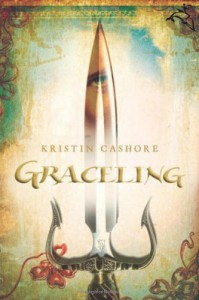
Graceling - Kristin Cashore Three star books are often the most difficult to write reviews for because they're books that didn't completely work for me and yet I still enjoyed them overall. Graceling is one of those books. I'll start by saying that when it comes to high fantasy I tend to prefer political intrigue over adventure stories, and while Graceling is a mix of both it definitely leans more heavily on the latter. The long stretches of time spent traveling were a bit tedious for me. Those who love adventure fantasy stories will probably enjoy this more than I did.

My feelings towards Katsa are mixed. I love her strength, which is manifested both physically and mentally. She is well-versed in the fighting arts, she's confident in her physical abilities and she is a survivor. She's also a determined character who fights for what she wants, and unlike so many other YA protagonists, she doesn't become a doormat once she falls in love. Additionally, I appreciated her desire not to have children because it's a rarity among female characters in nearly all media. There is still a real stigma against women who don't want to be mothers in our society and it's important for girls to get the message that wanting children is a choice not a requirement.

Where Katsa lost me was with her views on marriage, not that she didn't want to get married, but her rationale behind it, which was basically that marriage robs women of their independence. This view would have been more understandable if marriage in the book was shown to be nothing more than a way to oppress women and take away freedoms they had when they were unmarried, however, this was not the case. There was one marriage that was shown in a negative light and the situation wasn't even known to Katsa when she formed her opinion. Also, the romantic storyline itself didn't support Katsa's unwavering beliefs about marriage.

Although my feelings about Katsa were middling, I really did like her love interest, Po. He is the antithesis of the abusive, brooding male trope. He knows what he wants and he goes for it. He's open and honest, although not unrealistically so. He never tries to control Katsa and he loves and supports her unconditionally but this love doesn't cause him to forsake all others. If I have any complaints about him at all it's that he was a little too perfect in his role as a love interest. I would have liked it more if he were less of a push over when it came to Katsa's demands about the terms of their relationship.

Aside from the uneven pacing, the biggest problem I had with Graceling was the world-building, which I thought was entirely too shallow. With the exception of Lienid, the other kingdoms didn't seem to be very distinguishable from each other in terms of culture, and the social structure was underdeveloped. Lienid was far better explored and distinguishable from the other kingdoms, however, I was still left with a lot of questions about the specific physical characteristics that made them unique. Katsa indicates that the Lienid people look different from people of the other kingdoms but it's unclear how. The only physical traits mentioned are their dark hair and gray eyes but these are also found in the other five kingdoms according to Katsa. There have to be some differences (skin color, eye shape, hair texture, etc.) because Katsa knew Bitterblue was part Lienid by looking at her but Cashore never comes out and says it, which led to some difficulty in picturing the characters.

The magic system was also a little too haphazard for me. I like rules when it comes to magic and the Graces really don't have any in terms of what powers a person has and who receives them. Katsa's power was almost limitless and there were no real consequences to balance out her power. In the beginning people feared and hated her because of her Grace, and she was also used as a tool, but these consequences were minor compared to the power she had and they were easily remedied.

Overall, I enjoyed Graceling but my enjoyment was as uneven as the pacing. I'm still debating whether or not I should read the sequels.
Ultraviolet - R.J. Anderson

When I first heard about Ultraviolet I wasn't sure it was the right book for me. I'm always wary of young adult novels that have anything to do with the mental health field. Rarely is the field presented in a realistic or responsible fashion (see The Unbecoming of Mara Dyer for a particularly bad example) so imagine my surprise when I had zero complaints about the way it was portrayed in this book. R.J. Anderson has clearly done her research regarding therapy, medication and daily life in an institution, which I really appreciated. It made the setting feel more realistic and kept me engaged in the story.

The strongest aspect of Ultraviolet was the characterization. Alison, the narrator, is strong, intelligent and relatable despite having synesthesia, a unique condition which causes her to associate words with tastes and colors. Although she's special, she doesn't come across as a Mary Sue. She has flaws, she makes mistakes and there are consequences to her gift. My favorite character was Tori, Alison's pretty blonde nemesis. I love her blunt personality, which made her distinctive. She isn't always nice, but she's still likable because of her strength and intelligence. She has depth. Alison's love interest is likable, and it's easy to see how she would fall for him, however, the age difference between them was an issue for me.

Although I enjoyed many of the side characters, I wish they had been fleshed out a bit more, particularly with regard to her father and brother. I also wasn't sure of Cherie or Micheline's purpose in the overall story, and the reader is left with a lot of questions about Sanjay (perhaps they'll be addressed in a sequel). The resolution to several character arcs also happened a little too quickly such as Alison's mother's abrupt change in feelings towards Alison, and the progress of the other patients in the mental institutions, which happens off the page and is summed up at the end.

Given my limited experience with science fiction novels, I thought the plot was unique. I was able to predict the twist, which occurs about seventy five percent into the novel, but I wasn't completely sure I was right until it happened, and I didn't guess the details. My only complaint is that some of the science fiction aspects were a little hokey at times, but I still enjoyed the story despite this.

I also really loved Anderson's writing, which is another surprise since I'm usually iffy about poetic prose when used in the first person, but it works here because of Alison's synesthesia. Her condition made it believable that she would think in such a lyrical and metaphoric way. The descriptions are simply beautiful, and they give the reader insight into the way Alison's mind works.

I'm really glad that I read Ultraviolet and I'll definitely be reading the sequel, which is told from Tori's perspective.

Poison Study - Maria V. Snyder I really enjoyed Maria Snyder's Poison Study. Fantasy novels can usually be broken down into two types. Adventure stories where the characters go on long journeys, and those that focus on court intrigue and politics. Poison Study is definitely one of the latter.

The book starts with a very interesting premise. Yelena, a prisoner, is given the opportunity to avoid execution by becoming the food taster for the military leader of Ixia, a different type of death sentence, one that she can't see coming. Yelena's position as a food taster adds a layer of suspense to an already suspenseful story. Yelena faces many dangers at court from the Commanders enemies, from powerful magicians, from the father of the man she killed, who also happens to be a General, and from her friends. Snyder does a very good job of keeping the reader guessing about several characters' motivations and intentions. Unlike many fantasy stories, there were plenty morally ambiguous characters, which are always welcome.

Yelena was a great heroine, who is both strong and intelligent. She's able to use her mind to figure out how to survive the various threats she faces. She is also not the type of character who sits around waiting to be rescued. Instead, she fights for herself and attempts to better her skills to increase her chances of survival. Valek, her love interest, is also a strong character, both in his assassination skills as well as his intellect. He is a character with many layers. There is no instalove in this story. The romance between them builds over time and it's easy to see why the characters like each other. They admire and respect the others' skills and intellect.

I was also impressed by the world building. Most fantasy stories I've read take place in a kingdom ruled by a monarch. Synder chose to set her novel in a land under military control, which gave the setting a slightly more modern feel despite the fact that the weaponry and technology was medieval.

Overall, a fantastic story. I'd recommend it to anyone who likes fantasy stories about court intrigue, with strong female characters, and moral ambiguity.
The Unbecoming of Mara Dyer - Michelle Hodkin

If I had to pick the top ten worst books I've ever read, The Unbecoming of Mara Dyer would be one of them. It ranks up there with Halo, Hush, Hush, and Fallen in terms of plotting, romance, and characterization. Consequently, if you liked all three of those books chances are you're going to love this one.

In exploring the problems with this novel, I suppose I should start at the beginning: the cover. While it's beautiful and great from a marketing standpoint, it has absolutely nothing to do with the actual book.

As mentioned above, I found pretty much every aspect of the substance of this novel to be problematic, starting with the characters and their relationships. Noah Shaw is the perfect example of a wish fulfillment love interest. It's as though Michelle Hodgkins read Twilight and thought "I'll see your Edward Cullen and raise you Noah Shaw." Noah is incredibly good looking, wealthy, an animal rights advocate, drives a Prius (even though he can afford a much more luxurious car and shows no real concern for the environment), smokes without smelling like an ashtray, sleeps with every girl in school (except the bitchy blonde girl, of course), and he's English, although he doesn't use any British idioms or slang.

Despite being a lady killer, who uses girls for sex before discarding them like used tissue, he falls head-over-heels for Mara without so much as having a single conversation with her. Just because he had a vision about her before they meet does not explain why he would fall in love with her, only that he might take an interest in her.. He takes her on elaborate dates, defends her honor, reveals his vulnerable side, and insists on introducing her to his parents and meeting her family without getting to know her or building any trust between them. Nothing about their relationship felt organic or believable. It was instalove at its worst.

Noah s supposed to be a sexy playboy but I found him to be one of the most vile heros in YA literature. His treatment of women goes beyond mere promiscuity, which in and of itself isn't an issue for me. He is actually scornful of women and has a psychopathic lack of empathy for their feelings. He also has the maturity of an eleven year old, which is problematic because he's supposed to be seventeen. In one example, he brags to Mara that he knows the word "vagina" in several languages while they're on a date. This is not attractive behavior.

All of his flaws would be fine and dandy if he were the villain of the story, and if Mara was appropriately disgusted by his behavior. Unfortunately, the reader supposed to swoon over him, and Mara isn't all that horrified. While she does chastise him in the beginning, she secretly thinks how sexy he is, and she excuses his behavior every single time, which makes her a problematic character. Having quick comebacks doesn't make her strong when she behaves like a spineless jellyfish.

Additionally, I could not find any redeeming secondary characters. Jamie, Mara's best friend, is the token bi-sexual jewish black guy (by his own admission). He walks onto the scene wearing a shirt that says "I'm a cliché" and never becomes a fully realized human being. He is a character of convenience, only showing up when Mara needs something then disappears into oblivion like a good little token character. The sole purpose of Daniel, Mara's older brother, is to be a cheerleader for Noah and this makes him the worst older brother ever. He knows about Noah's reputation and yet he still insists he's a good guy and pressures his sister into dating him.

And of course, what YA romance novel would be complete without the slutty bitchy blond girl. Anna is one of the worst examples I can think of. Without having a single conversation with Mara, she proceeds to torment her for no reason. And like every other slutty bitchy blonde girl she is in love with the "hero" and is incredibly jealous of the heroine because she has his attention. There is nothing realistic or original about her.

As one would expect from a novel with shallow, nonsensical characters, the plot is equally dreadful. Do not be fooled by the fantastic premise. This is a romance with paranormal aspects thrown in as an afterthought. While the beginning of the story shows promise, the mystery is quickly set aside, making random appearances without any real progression until the very end. Even if the romance was taken out, I still found the mythology itself to be terribly convoluted. I felt as though Hodgkin threw in everything and the kitchen sink and when all was revealed nothing made any sense.

The technical aspects of the novel didn't fair much better than the rest. While the sentence structure and grammar were fine for the most part, the editing at times was very sloppy. For example, in one paragraph Mara says "I sat down beside Noah…" then not two paragraphs later without any indication that she had gotten up she says "Noah slid into a chair across from my brother and I sat next to him…" This was not the only error of its type, but it was definitely the most blatant.

Lastly, I cannot end this review without lamenting Hodgkin's complete lack of understanding of the field of psychiatry, both in terms of therapeutic technique and medication. Mara is prescribed an antipsychotic medication without practical discussion about the pros and cons, including the possible side effects, which are both common and potentially severe. While this might happen with an overworked psychiatrist working with low income individuals in a community clinic, who exclusively does medication management, this is not believable for a psychiatrist hired by an upper middle class family, who has time to do "therapy" with their clients. It is not standard practice and it's completely unethical. Additionally, there is no way the medication would be prescribed without a lengthy discussion with Mara's mother.

Further, once Mara begins taking the medication, she has no side effects, which does not happen with antipsychotics. They are very powerful drugs, which almost always have some side effects, and they can be pretty nasty, otherwise medication compliance would be higher. Also, Mara carelessly forgets to take her medication on several occasions without any consequences. Discontinuing or missing doses of these sorts of medications can be very dangerous. Clearly, Hodgkin did not do any research before writing about them. For a realistic presentation of psychiatry in YA literature, check out Ultraviolet by R.J. Anderson, who incidentally did extensive research on the subject.

My advice: Skip this book.

Unspoken - Sarah Rees Brennan I don't know if I've felt ever felt guiltier about not liking a book than I do about this one. So many people love Unspoken to pieces and I can understand why, but I was very underwhelmed. It seems to me that Unspoken was a book that was trying to break out of the YA mold but ended up following the fold.

By far the biggest problem with this novel is Jared Lynburn. He's your typical brooding, overprotective, woe-is-me, bad boy with anger management issues. I find none of these traits attractive, and therefore I could not identify with Kami's attraction to him even considering their shared thoughts. Although he and Kami are not in a relationship, he acts possessive of her. He has to be tricked into "letting" her go out with her girl friends without him, he sabotages her date with another guy, and he's always hovering around her in this creepy overprotective way, even when she tells him she needs space.

I also found his self-pity very irritating and overly melodramatic, and I didn't appreciate how he would use his self-pity manipulatively to make Kami forgive him for his asinine behavior. He also had a tendency of expressing himself with physical violence. We're introduced to the character just after he gets into a fight with every member of the rugby team (we're given no explanation for this fight but I'm inclined to believe it was Jared's fault based on his subsequent actions), and he punches his cousin, Ash, in the face without any provocation. Physical assault is just not okay.

When I was first introduced Kami Glass, I was intrigued. She was intelligent and witty, and I admired her ambition and strength. Kami also says the right things about not wanting a possessive boyfriend and needing independence, but in the end actions speak louder than words. While Kami initially admonishes Jared for his behavior, she quickly backs down and forgives him because he acts hurt by her criticism. I can't think of a single instance where she didn't end up comforting him and assuring him of his worth after he acted possessive, jealous, or overprotective. And even though his behaviors never change (he's possessive, overprotective, and jealous to the very end), she falls head over heels in love with him. By the end, I lost all respect I had for her character.

I didn't find the side characters all that compelling either. There isn't much to say about Ash. He lacks personality and character development. He is the nice guy of the love triangle and he follows the path taken by nearly all other nice guys he turns out to be evil, of course. Angela's people-hate tip-toed the line between funny and annoying. Holly had potential in that she broke the YA mold by being pretty and popular with guys, yet also nice, however, she didn't have much depth. Kami's family was a bit too cartoonish for me, particularly her father, who joked the entire book. He doesn't have one line that wasn't supposed to be funny.

Speaking of humor, I thought it was overdone. Not only was every character witty, which was very unrealistic, the characters would also make jokes during situations that called for serious reflection. The overuse of humor also made Kami and Jared's angst-filled relationship seem even more overly melodramatic because the scenes and conversations exploring their relationship were the only serious scenes in the entire book.

As for the mystery, it was unnecessarily drawn out by lack of communication and characters inexplicably deciding not to follow up on information. Everyone in town seems to know the Lynburn secrets except Kami, Angela, Holly and Jared, despite the fact that Kami and Holly grew up in the town and are not outsiders, and Jared is a Lynburn. It seemed unrealistic that no one, including Kami's mother, would tell Kami what they knew about the Lynburns. There were also several instances where Jared's family would act strangely around him or say something cryptic, but instead of asking questions, he would just leave even though he supposedly wanted answers. His family wasn't even trying to hide the truth from him, and when he finally did ask for an explanation, they told him without a fight.

Lastly, I thought the ending was problematic. Cliffhangers are one thing, but there still should be some sense of closure at the end of a book, despite unfinished plot lines. Unspoken felt like it was ended in the middle of the story, as though Brennan wrote the entire trilogy as one book and then randomly chopped into thirds. I wish the ending had been less abrupt and I also wish the Jared/Kami angst had been left out.

The book gets an extra star for effort, but honestly, I didn't enjoy reading this one.
The Raven Boys - Maggie Stiefvater

The Raven Boys is only the second novel I've read by Maggie Stiefvater. My reading experience with the first novel, Shiver, did not go very well so understandably I was reluctant to read any of her other books. But then I heard the premise for The Raven Boys and I was intrigued. I couldn't resist giving Stiefvater another shot, and I'm glad that I did.

Seventeen year old Blue Sargent comes from a family of psychics, although she herself isn't one. She never has psychic visions or sees spirits until one year on St. Mark's Eve—when the spirits of those dead within twelve months come out—the spirit of a teenage boy wearing a uniform from the prestigious prep school, Aglionby, appears to her in an abandoned churchyard and tells her his name is Gansey. Blue is told the reason she can see him is because he is either her true love or she is the one who kills him. Complicating the matter is that her mother has predicted that Blue will kill her true love if she kisses him, suggesting that both reasons may be true. Inevitably, Blue meets Gansey and his three friends: Adam, the scholarship kid with something to prove, Ronan, a deeply disturbed boy, filled with rage, and Noah, their mysterious silent friend. Together they seek to find the spirit of Glendower, a Welsh King who disappeared centuries ago, and unlock the secrets of the town of Henrietta.

The Raven Boys is as much of story about Gansey and his three friends as it is about Blue. Written in the third person perspective, Stiefvater follows not only Blue, but Gansey, Adam, and occasionally, their teacher Barrington Whelk. The most compelling part of the story for me was the friendship between the four boys, particularly Gansey and Adam. I thought all four characters we well written, and Stiefvater does a fantastic job of keeping certain aspects of their lives secret from the reader, gradually revealing information throughout the book. The mystery surrounding Blue's family was also intriguing, and I look forward to finding out more about her family in subsequent novels.

In addition to having an original premise, I really enjoyed the prose. The descriptions were magical and emotive without being overwrought or purple, which was one of my complaints about Shiver, though a minor one. Stiefvater's writing-style lends itself well to the third person perspective. Although not nearly as flowery as Shiver, The Raven Boys is still description heavy so I would hesitate to recommend it to those whose chief complaint about Shiver was the prose, or to those who think Laini Taylor's writing is too purple.

My main criticism of The Raven Boys has to do with the pacing. The plot during the first half of the book moves incredibly slowly while the reader is inundated with backstories about Blue and the boys, as well as the history of Glendower, and the history of Gansey's search for him. Reading about Gansey's passion for Glendower might have been more interesting had Stiefvater revealed the reason behind his passion at the beginning of the novel rather than towards the end. Knowing his reasons earlier would also have helped me understand Gansey better and connect with his character sooner. During the first half, there was a distinct lack of urgency to keep on reading, but once the plot starts moving, I became very engaged. I liked that the romance was in the periphery, and the focus was more on the plot and the relationships between the boys.

I'm a little iffy about the romance itself. I was happy that there was no instalove (Blue and Gansey don't even like each other during their first meeting), but the love triangle suffers from the dreaded problem of predictability. There is an inevitability to Blue and Gansey, which made the relationship between Adam and Blue feel like a waste of time. Every time I started to feel something for them, I would remember that their relationship was leading no where and then wonder why it was there in the first place. I'm also not sold on the Gansey/Blue relationship yet, particularly because of the potentially devastating effects it might have on Gansey's relationship with Adam, which I find far more compelling than Blue's relationship with either of them. Had the romance taken a larger role in the story, I would not have rated this book so highly.

All in all, I really did enjoy the story for its original plot, and unique and interesting characters. I will definitely be reading on to find out what happens next.

Black Heart - Holly Black I whole heartedly recommend this series. White Cat was definitely the strongest of the three but I enjoyed the entire trilogy.
Fruits Basket, Vol. 1 - Natsuki Takaya Note: Review and rating for the entire series.

I really ended up enjoying this series quite a bit. Although the beginning was a little slow going for me, the series picks up around the sixth volume, and continues to improve as the story unfolds. I would rate the first third three stars, the second third four stars, and the last third five stars. Over time I became fully invested in the characters and their story lines, even shedding a few tears at the end. I thought the romantic relationships and the love triangle in particular were handled well. Fruits Basket is able to avoid the very common problem of predictability. The resolution of the love triangle is not obvious before the actual resolution. I also enjoyed the friendship relationships between the characters, and the character development, which happens slowly and organically over the course of the series. Self-sacrifice is a very strong theme in this series, as is acceptance of others, and grief and loss.

Note: The anime faithfully follows the first third of the manga, but has a completely different ending. Because two thirds of the series is not covered by the anime, I'd recommend the manga over the anime, particularly because I thought the latter two thirds was better than the first third. For those who have already watched the anime, the manga is still worth the read.
Before I Fall - Lauren Oliver Initial reaction:
Wow. Just wow.

Full review:
Every so often you read a book that just resonates with you, a book that reaches deep down to your soul and rips it to shreds. For me this was one of those books. I rarely rate books five stars, but I couldn't give this one anything less.

Before I fall is the story of Samantha Kingston, one of the popular girls at her high school, who seems to have it all until she's involved in a tragic accident. Except instead of dying, Samantha is forced to relive her last day over and over again. Over the course of seven days, Samantha goes on a journey of self-discovery and redemption, learning harsh lessons about herself and her friends, as she searches for the reason why she's stuck reliving her last day, and a way to escape the time loop.

Reading the synopsis, it's easy to make comparisons to Groundhog Day and Mean Girls but unlike those movies, Before I Fall is not a comedy. There was no humor to cushion the cruelty and unpleasantness, making this a very different experience than either of the aforementioned movies. Instead of exaggerated truths, Oliver's portrayal of high school, popularity, and bullying were extremely realistic.

Samantha is your classic mean girl, yet I found myself sympathizing with her even though I hated those girls when I was in high school (note: I wasn't one of them although I wasn't bullied either). I was able to see how she came to be the person she was, and I understood why she acted the way she did. Her character development over the course of the novel was also very believable. Samantha's growth isn't linear. She falters along the way, taking several steps backwards at times, but in the end her character arc is resolved beautifully and realistically.

All of the characters, both major and minor, were very nuanced and three dimensional, although not always likable. Lindsay, the Regina George character, is never redeemed but she isn't cartoonishly evil either. Kent is a sweetheart and the voice of reason, and Juliet's character is heartbreaking. The relationships between the characters are also well developed and nuanced from the deeper relationships between Samantha and her close friends, to her budding romance with Kent, to her ambivalent relationship with her family. I could even understand why Samantha was dating Rob, despite the fact that he's a jerk. I also really enjoyed Samantha's brief interactions with minor characters and how they helped her evolve as a person.

On top of having realistic characters and relationships, Before I Fall is beautifully written. Samantha's voice sounds very authentic, and the descriptions are poetic at times without being overbearing. The dialogue was also well written and very realistic. I am in complete awe of Oliver's talent as a writer.

Honestly, I can't say enough good things about this novel. I would recommend it to anyone who loves YA fiction so long as they're prepared to be taken on an emotional roller coaster. Although this book was not an easy read—by the end I was reduced to a sobbing mess—the story was worth it.
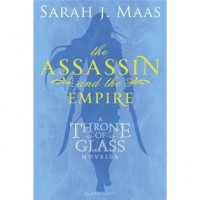
The Assassin and the Empire (Throne of Glass, #0.4) - Sarah J. Maas


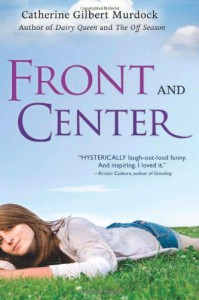
Front and Center - Catherine Gilbert Murdock

I feel like I have to preface this review by saying I liked this book because I fear my review is going to come across more negative than my star rating suggests. I did enjoy reading it, and I got through it pretty quickly (partly, because it's very short) but it was a disappointment when compared to the first two.

The strongest aspect of this book for me was D.J.'s relationships with Beaner and Brian Nelson, her on-again/off-again ex-boyfriend. I felt like D.J.'s struggles and growth in the romantic sphere were very realistic, although I thought Beaner let D.J. off a little too easily at the end. Even if the relationship didn't mean much, it still hurts to be dumped and he did seem to really like her. The chemistry between D.J. and Brian was still going strong, and I liked how in the end she was still true to herself. The conclusion to the romantic relationship could have been a disaster in the hands of another author, but Murdock does a great job giving readers a happy ending that is still realistic, and didn't ruin her characters.

Unlike the first two books in the series, I wasn't immediately sucked into this one. The start was very slow, and the entire book seemed to have a lot more filler, which is odd since it's already very short. Even more problematic for me was D.J.'s character regression. All of the lessons she'd learned from books one and two completely flew out the window. Her self-esteem reached new lows, which was particularly unbelievable because, unlike in the first book, both this one and the second were filled with people praising her for her accomplishments and recognizing how amazing she was. D.J.'s actions in this book would have been much more believable if the events from the last two hadn't happened.

Speaking of praise for D.J., I also felt like I was being beat over the head with how wonderful, important, and special she was in this one. Every character seemed to fall all over themselves for her. Even characters with whom she had previous conflict were nice to her. None of the characters held her accountable for her actions, and overall there weren't any longterm consequences for her mistakes. The only conflict in this novel comes from D.J. herself and her unbelievably low self-esteem.

Lastly, I just wasn't interested in the college sports recruitment process or basketball. It's funny because I much prefer basketball to football, yet I was actually interested in the football storyline in the first book and bored by the basketball storyline in this one. It's clear that Murdock has done a lot of research about the college sports recruitment process, but there wasn't enough of a plot outside of that to keep me engrossed.

Overall, I liked the book but I didn't "really like" it or love it the way I did the first two. Still, it's part of a great series overall and I would hesitate to recommend it to anyone.

The Off Season - Catherine Gilbert Murdock I'm going to start off this review by saying I really enjoyed this book, but in my opinion it was not nearly as good as the first, and therefore I've rated it one less star.

Many of the positive aspects of the first book were still true of this one. D.J. is still an awesome and relatable character, the relationship between D.J. and her family is still interesting, and D.J. still has amazing chemistry with Brian Nelson. The relationship between D.J. and Brian was handled beautifully. The issues they faced were very realistic and I enjoyed D.J.'s handling of the situation. It was nice to see a YA protagonist stand up for herself rather than letting her love interest walk all over her.

The reason I didn't enjoy this book as much as the first was because I felt the story lost some of its realism. The situations D.J. found herself in were over the top, in particular the People article. I'm not a regular reader or even an occasional reader of the magazine, but I've picked it up a few times in doctors' offices over the years and I find it extremely difficult to believe that they would do a story about an unknown girl from some unknown small town joining her high school football team. People is far too busy covering A through D list celebrities to have room for that sort of story. If Murdock had used some teen magazine like Teen or Cosmo I would have believed it (back in the day, when I still read those magazines, they often profiled non-celebrities and D.J.'s story was right up their alley), but not People.

There were also several unrealistic plot points related to D.J.'s brother's injury. Her parents' neglect in that situation didn't ring true given what we know about their characters. Also, Murdock went a little heavy on hero worship of D.J. in terms of Win's recovery. This might have bothered me more if it hadn't been balanced by Brian's betrayal and the end of her football career, which made her seem less perfect.

Overall, an enjoyable read and I'd still recommend it to anyone who liked the first book, but it just didn't resonate with me in the same way the first one did.
Dairy Queen - Catherine Gilbert Murdock When I picked up Dairy Queen, I wasn't expecting to love it as much as I did because of the awful title (this book has nothing to do with the ice cream chain), ugly cover of a cow with a crown (the international paperback cover is much better), and a synopsis that doesn't capture the heart of the book. D.J.'s relationship with Brian Nelson, and her trying out for the football team despite being a girl both play a major role in this story but you wouldn't know it from reading the blurb on the back. Football is only mentioned twice and only once in relation to D.J. even though it's a major component of her journey towards self-discovery. Although I'm not the biggest football fan, I do tend to enjoy stories about female empowerment in male dominated worlds, and this is certainly one of them. I couldn't help be reminded of the 1990s movie, Little Giants.

The main reason I fell in love with this book was D.J. and her unique narrative voice. She's resilient, tough, and responsible, but like many teenagers she also struggles with issues of self-confidence and self-identity. I found her to be highly relatable despite the fact that I've never struggled with lack of communication or being shouldered with too much responsibility. This is not a book with cardboard cutout, two-dimensional characters. Everyone had their admirable qualities and their flaws. The relationship between D.J. and her family was particularly well written, as was her relationship with Brian Nelson. The two of them had amazing chemistry, and the issues they faced seemed very real. Murdock does a great job of both creating and developing her characters and the relationships between them.

Even though football and farming, two subjects I've never been interested in, are featured quite a bit, I still enjoyed this book. In fact, Murdock was able to take these unappealing subjects and make them interesting. I wouldn't hesitate to recommend this book to anyone who likes YA fiction.
The Assassin and the Underworld (Throne of Glass, #0.3) - Sarah J. Maas

Actual Rating: 1.49 stars

The Assassin and the Underworld was my least favorite of the four Throne of Glass prequels, mostly due to the introduction of Lysandra, the typical mean-girl slut (in this case she is literally a whore) who hates the protagonist for no discernible reason except perhaps jealousy. There is a lot of slut-shaming in this story, and once again female promiscuity is linked to mean/negative behavior. Throughout the novella, Lysandra's profession is given as a reason for why Caelena hates her, or why she is not as good as Caelena. It boggles my mind that Caelena could feel morally superior to Lysandra because she sells sex for money, when she herself is killing people for money, people who have done nothing more than cheat on their spouses as revealed in The Assassin and the Pirate Lord.

This novella also solidified my dislike for the names Maas has chosen for both places and people. In addition to Caelena, a name that is difficult to pronounce and read, there is a woman with the name Leighfer, which looks and sounds ridiculous and strikes me as masculine. Also, many of the place names including Ardlan and Melisanda sound like names of people to me. Naming is, of course, highly subjective but so is my review and the names were distracting enough to affect my reading experience.

The only positive thing I have to say about this novella was that there was a vast improvement in the writing from the first two novellas. I wonder if there was a significant passage of time between when the first two were written and the second two. The prose in this one flowed much better and there were far fewer awkward sentences. That said, the writing continues to be very juvenile, and the dialogue was very cheesy, but it was no worse than the other novellas.

The Disreputable History of Frankie Landau-Banks - E. Lockhart The Disreputable History of Frankie Landau-Banks is a fun story but honestly I don't have a lot to say about it. There wasn't much depth to the plot. I was disappointed because it didn't live up to E. Lockhart's Ruby Oliver series, which is one of my favorite YA series. Frankie is spunky but no where near as likable, funny, or relatable as Ruby Oliver. At some points Frankie could even be a little annoying with her over-the-top feminist thoughts, and her immaturity. Overall, I enjoyed the story and appreciated Lockhart's humor, but it wasn't one of my favorites.
The Assassin and the Desert (Throne of Glass, #0.2) - Sarah J. Maas

The Assassin and the Desert was marginally better than the first prequel in the Throne of Glass series but not by much. The writing in this one was improved but still very problematic. The dialogue was cheesy and much too modern to fit with the renaissance-like fantasy world that Maas has created. There were also some glaring grammatical issues. Although the story is written in past tense, there were several awkwardly placed sentences that veered into present tense.

Characterization was still very much an issue in this novella. Celaana is not believable as an assassin let alone the world's most deadly assassin. She only kills one person in this story (which is one more than in the last) despite being caught in the middle of a siege. I will say that I found her slightly more likable by the end of this installment than I did at the beginning. She does show some character development but her arrogance, brattiness, and superficiality still makes her unlikable.

The story could also stand to be tightened a lot. The plot meanders quite a bit and there were a lot of side stories, such as a useless romance, that were extraneous. Overall, I was not impressed, although the improvement in writing and the character development made it a slightly more enjoyable read than the first.

Currently reading

Bel Canto
Ann Patchett
Les Misérables
Victor Hugo, Norman MacAfee, Lee Fahnestock
NW
Zadie Smith
The Dream Thieves
Maggie Stiefvater
A Dance With Dragons (A Song of Ice and Fire, #5)
George R.R. Martin